
 The Randolph County Homeland Security Emergency Management Agency (HSEM) is responsible for overseeing the preparedness of the county for potential natural disasters, health disasters, and man-made disasters such as terrorist attacks; additionally, this department will act as a liaison between local agencies and those from the district, state, and federal agencies should such an event occur.
The HSEM Director is Chris Shaneyfelt. His office is open from 8 am to 4 pm M-F; however, Chris is often in the field so be sure to call or email his office for an appointment.
Randolph HSEM reports directly to the Randolph County Commissioners plus the Emergency Management Advisory Committee. Randolph HSEM interacts closely with county EMS (Ambulance) providers, the Sheriff's office, the Health Department, Police and Fire Departments, and the St. Vincent Randolph County Hospital Safety Director. Randolph HSEM also works closely with the Indiana Department of Homeland Security and with the United States Department of Homeland Security.
Learn the latest news posted on the Randolph County Homeland Security Facebook Page or on Twitter at @RandolphHSEM.
Additional Information:
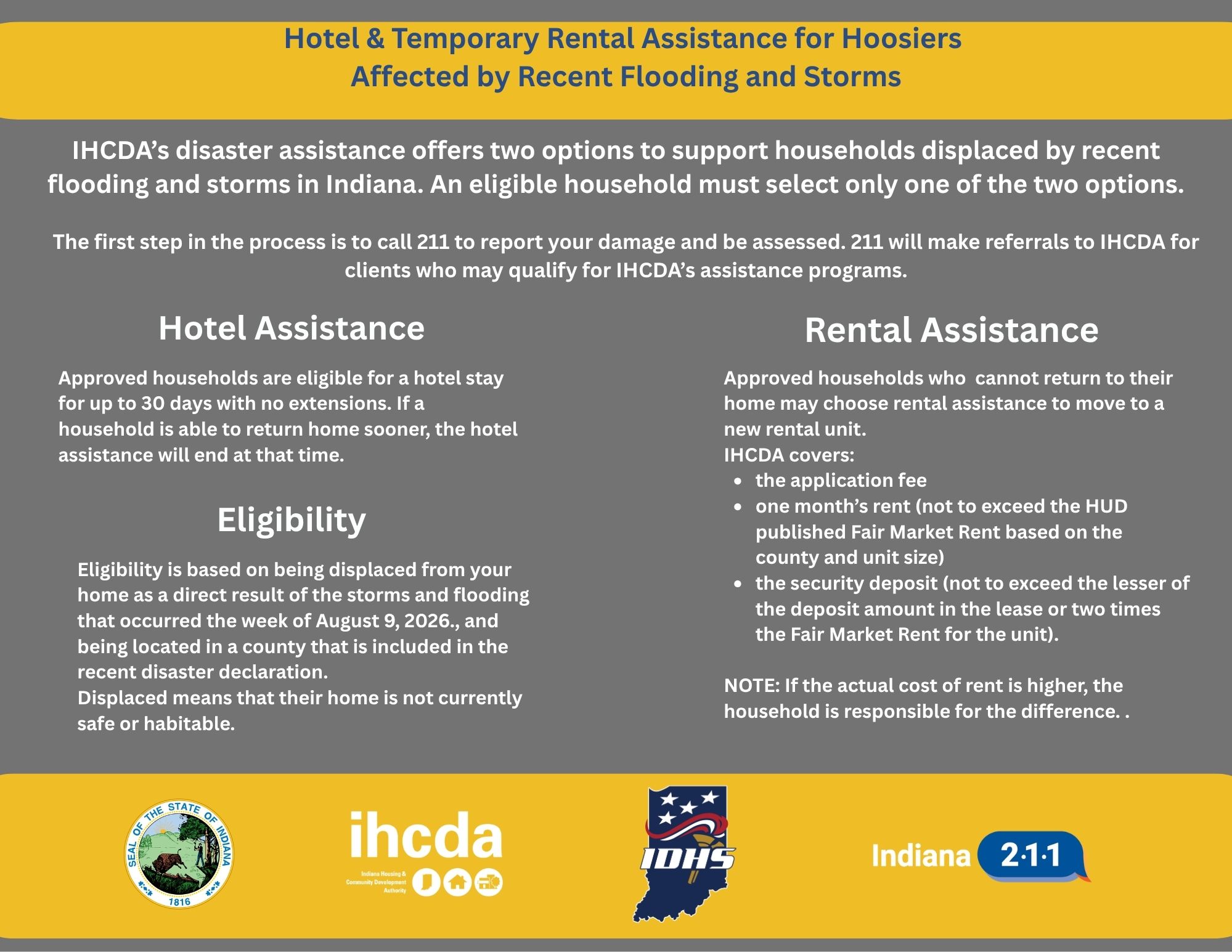
- Temporary house grants through the Indiana Housing and Community Development Authority
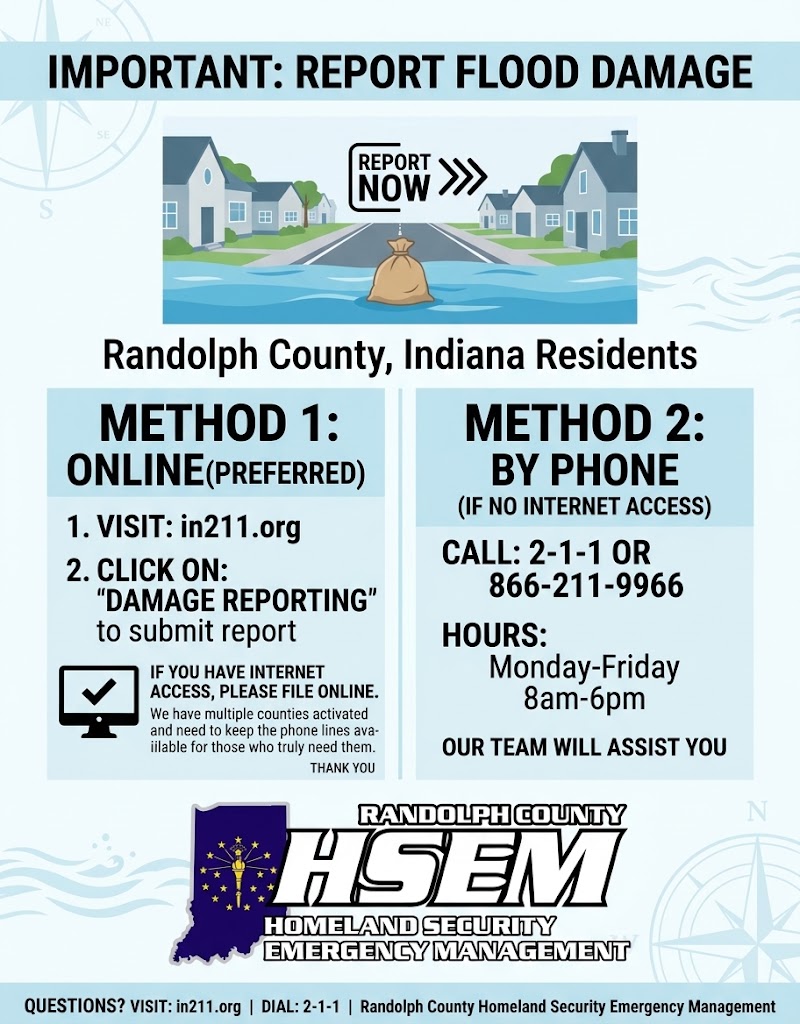
- The Indiana Housing and Community Development Authority is providing temporary housing grants to help eligible displaced Hoosiers transition from emergency shelters into hotels, apartments and other temporary accommodations. Hoosiers in need of temporary housing can find more information at IN211.communityos.org or by calling 211. Additionally, Hoosiers can find American Red Cross shelters in affected areas here.
- Emergency SNAP benefit replacements
- Gov. Braun activated emergency SNAP benefit replacements for eligible SNAP recipients who lost food due to the storm or power outages. Affected Hoosiers will need to submit an affidavit for replacement benefits. The affidavit must be submitted within 10 days of the event, and the loss (due to power outage, flood, etc.) must be verified. The document may be uploaded to the FSSA Benefits Portal , faxed to 888-436-9199, or dropped off at any Division of Family Resources’ office.
- Need help understanding insurance coverage?
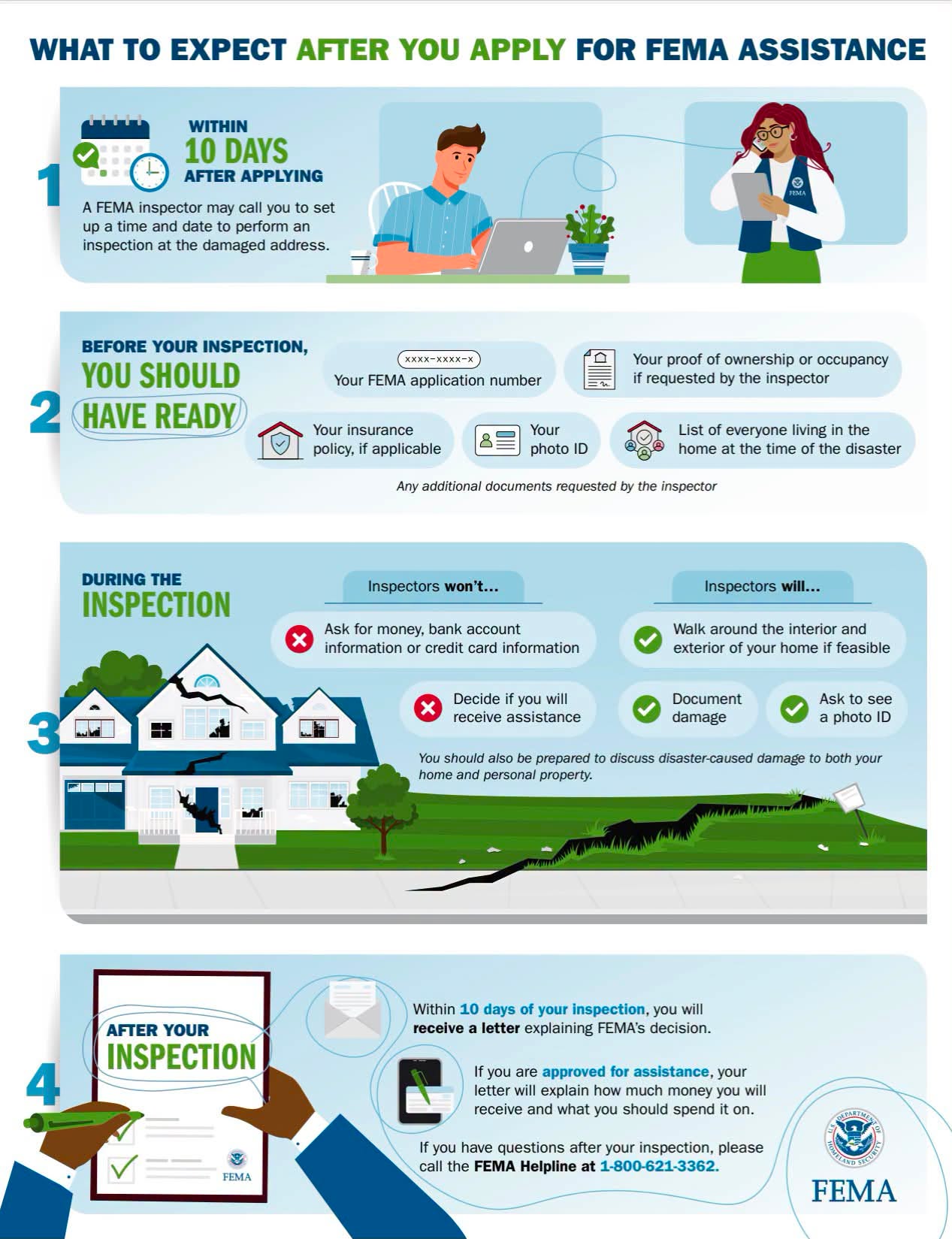
- The Indiana Department of Insurance is working with the Office of the Attorney General to help Hoosiers understand insurance coverage, determine next steps for uninsured losses and protect themselves from disaster-related scams. Consumer complaints can be filed with the Attorney General's Office at indianaconsumer.com.UPDATE -If you enrolled in IN211 to report flood damage and have applied for IA or SBA financial assistance, expect a telephone call from a FEMA inspector to set up a date and time to inspect your damage.FEMA inspectors will only walk the interior and exterior of your home, document the damage on paper and with pictures, and ask to see a form of identification.Inspectors will not ask for banking or credit card information. They cannot tell you if you'll receive assistance.



SBA - Benefits of a SBA Disaster Loan
Affordable, Reliable, and Flexible Disaster Assistance
Learn More
Sending you documents to FEMA
Online steps to upload your document
Appealing FEMA's Decision
Submitting an appeal
FAQs
- What is SARA Title III?
The federal Superfund Amendments and Reauthorization Act (SARA) became law in 1986. Title III of these SARA provisions is also known as the Emergency Planning and Community Right-to-Know Act (EPCRA). SARA Title III requires states to:
Promote outreach for developing local emergency preparedness programs to respond to chemical releases.
Receive reports from the regulated community.
Organize, analyze and disseminate the resulting information on hazardous chemicals to local governments and the public.
Specifically, this has required the establishment of state emergency response commissions and local emergency planning committees.The nationwide regulated community of manufacturers and non-manufacturers of hazardous chemicals must report concerning their emergency chemical releases; their Material Safety Data Sheets (MSDS); their facility hazardous chemical inventories (Tier I and Tier II reports); and their toxic chemical releases to the air, land or water (Toxics Release Inventory).
Because of this activity, businesses have reassessed their chemical inventories and their manufacturing processes. In addition, more businesses are working cooperatively with local governments to plan for and try to prevent an accidental chemical release.
Businesses are also pursuing waste minimization and pollution prevention programs and realizing monetary savings.
- How can I find out the current road conditions around the State?
You can find the current road conditions and status of any Indiana or Federal highway by going to this link: https://511in.org. From this link, you can enlarge the state map and click on various icons to find out the status of any Indiana highway and alternative routes.
- What is Randolph County's current travel status and how is it determined?
Randolph County's current travel status can be found at the following link:http://www.in.gov/dhs/traveladvisory/. The county travel status is changed by the order of the Board of Commissioners, based upon the recommendation of status change by the Randolph County Sheriff, the Randolph County Highway Director, and the Randolph County Homeland Security and Emergency Management Director.
The status change is done with the entire county community in mind, even though conditions in one portion of the county may be different than another portion of the county. The safety of the public and the emergency services personnel are utmost in our mind. Please do your best to follow the travel status and cooperate with emergency service personnel.
Should a travel warning be issued by the county, essentially declaring a weather emergency, persons are directed not to travel. The travel is restricted to emergency personnel only. Additional restrictions can be declared. With this said please understand the following:
- The travel statuses are for unincorporated portions of the county (meaning rural county roadways). They do not and cannot be applied to state or federal highways.
- Cities and towns may choose to follow or ignore the travel status. The choice is up to the Mayor and Town Council President.
- If your place of employment chooses not to follow the travel warning and orders employees to work, then you should report to work. The ordinance does not have the authority to regulate commerce and those businesses that chose to stay open during severe weather.
- We work closely with the schools and notify the superintendents as travel statuses as are changed. However, the decision for the schools to remain open or closed falls solely on the superintendent.
- What's the current Terrorism Advisory Level?