
West Nile virus (WNV) is an arthropod-borne virus (arbovirus) that is primarily transmitted in Indiana by mosquitoes in the genus Culex. WNV disease is the most commonly reported mosquito-borne disease in Indiana and in the United States. While most people who become infected with WNV do not develop any symptoms, some people can develop severe inflammation in the brain, spinal cord, or other parts of the nervous system.
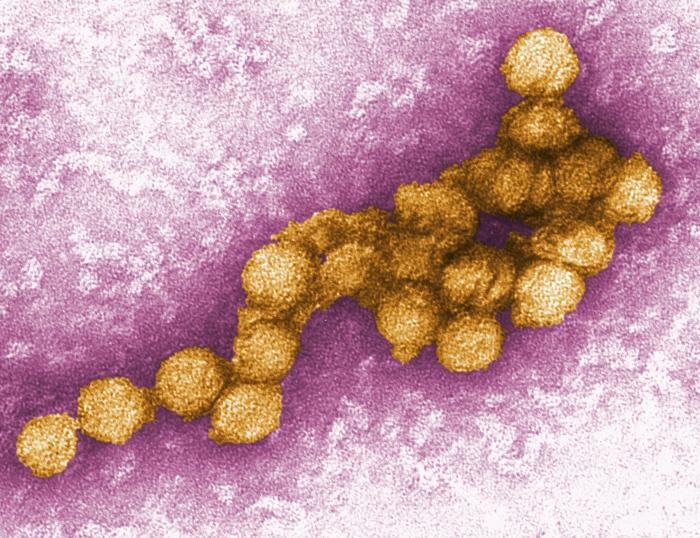
West Nile virus. Photo: P.E. Rollin, Centers for Disease Control and Prevention.
- Transmission
WNV is transmitted in Indiana primarily by mosquitoes in the genus Culex. Mosquitoes become infected when they feed on infected wild birds. Infected mosquitoes can then spread WNV to people, horses, and other mammals. Once infected, people, horses, and other mammals are “dead-end hosts,” which means that they do not pass the virus on to other biting mosquitoes.
WNV can also be transmitted by blood transfusion and organ transplantation. All blood donations in the United States are screened for WNV to reduce the chances that a patient could become infected from a blood transfusion.
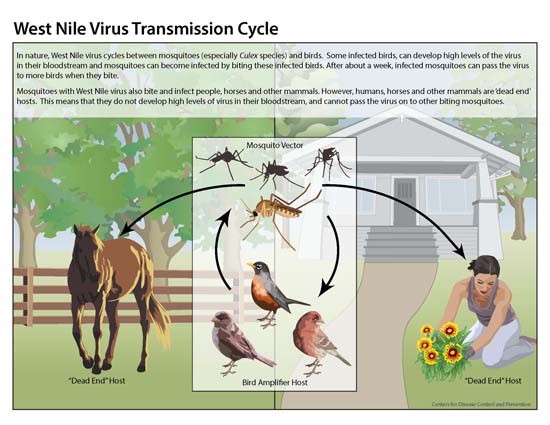
Graphic: Centers for Disease Control and Prevention.
- Signs and Symptoms
Most people (about 80%) infected with WNV do not develop any symptoms.
Some people (about 20%) develop a fever and other symptoms. Signs and symptoms of WNV disease usually appear within 2–14 days of a bite from an infected mosquito. These symptoms might include headache, body aches, joint pains, vomiting, diarrhea, or rash. Most people with this type of WNV disease recover completely, but some can have persistent fatigue and weakness.
A few people (less than 1%) develop severe illness affecting the nervous system. The most common forms of severe WNV illness include encephalitis (inflammation of the brain), meningitis (inflammation of the membranes that surround the brain and spinal cord), or paralysis.
- People older than 60 years of age are at greater risk of severe illness.
- People with compromised immune systems and those with certain medical conditions (e.g., cancer, diabetes, hypertension, and kidney disease) are also at greater risk of severe illness.
- Recovery from severe illness might take months. Some complications might be permanent.
- About 10% of people who develop severe WNV illness die.
- Diagnosis
Diagnosis of WNV disease is based on the patient’s signs and symptoms and appropriate laboratory testing. If you think that you have WNV disease, contact your health care provider.
- Treatment
No specific medication is available to treat WNV disease. People with severe illness usually require hospitalization, supportive care, and/or rehabilitation.
- Prevention
The best way to prevent WNV disease is to avoid mosquito bites. Please see our mosquito bite prevention page for more information.
For more information about WNV, please visit the CDC WNV webpage.
- Maps and Statistics
For data on WNV detections in people, horses, and mosquitoes, visit our Mosquito-Borne Activity Dashboard.
For historical WNV disease statistics in Indiana, please visit:
National statistics for WNV disease can be found at the CDC WNV Statistics and Maps page.
- Resources
Information for Providers
For WNV disease diagnosis, treatment, and testing information, click here.
More resources for providers can be found below:
Page last reviewed/updated: January 8, 2025