

- Who can receive Rural Health Transformation Program (RHTP) funds?
The initiatives in Indiana RHTP include a broad group of partners, including, but not limited to rural health hospitals and clinics; FQHCs and critical access hospitals located in or serving rural communities.
- What are Indiana’s initiatives?
Indiana presented 12 initiatives in the application submitted to CMS. There are 11 statewide initiatives and one regional grant initiative to be implemented at the regional level with eight defined regions. The narrative of the application can be found here.
- What is the difference between a statewide initiative and a regional grant?
A statewide initiative aligns and builds on Gov. Mike Braun’s Make Indiana Healthy Again plan. Statewide initiatives aim to support rural communities and are crucial for addressing broad issues, such as workforce development, as they allow for consistency and resource allocation across regions. Regional grants are tailored to local stakeholders that can identify opportunities for resource sharing and tackle specific community needs, including transportation. While problems are similar throughout rural Indiana, solutions are unique to the challenges and partners available within a region.
- How does this integrate/interact with Health First Indiana (HFI)?
Indiana RHTP will work in tandem with HFI initiatives. Funding will be used to expand, rather than duplicate, current programs already under way to create positive health outcomes for more Hoosiers.
- What is the funding timeframe?
Program funding is appropriated from FY2026 through FY2030. Each federal fiscal year’s funding aligns with five budget periods. For each budget period, recipients will have until the end of the following federal fiscal year to spend awarded funding.
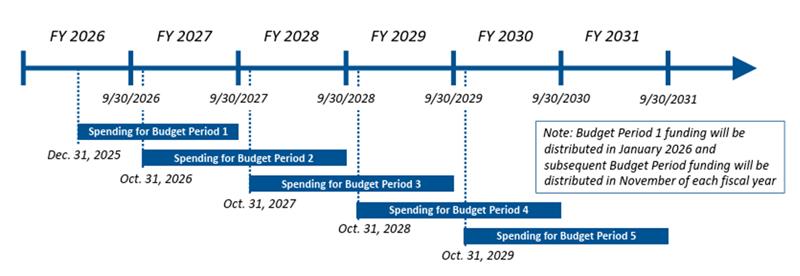
- Can Indiana’s proposed RHTP initiatives be added or changed after the application was submitted?
Once Indiana submitted the application on Nov. 5, new initiatives cannot be added; however, they can evolve during the life of the grant.
- Is the funding provided as a cost-reimbursement or as an upfront grant, and how are the funds disbursed?
Funding will be dispersed in multiple ways, depending on the initiative. All disbursed funds must be approved to support the implementation of the initiative tied to specific outcomes.
- How are external communications ensuring the focus remains on the people and families receiving support, rather than on technology upgrades (for example) alone? And how are we making sure the most vulnerable communities see meaningful benefits and improved rural healthcare outcomes?
The Indiana initiatives were developed to align with the CMS purpose for RHTP that investments that will transform how healthcare is delivered in rural communities, focused on addressing barriers to both receiving and providing care to those in rural communities. The initiatives align with the approved use of funds to:
- Make Rural America Healthy Again
- Sustain access to care
- Develop workforce
- Innovate care models
- Implement innovative technology
- Can executive staff or initiative leaders be invited to stakeholder meetings to help educate and inform?
The state will present a public, statewide information session and the recordings will be posted to the Grow Indiana website. In support of regional grant application development, regional grant stakeholder meetings will also be held for leaders at the local level.
- Is there a restriction on types of entities that can be subawardees/contractors under general initiatives?
There are no restrictions. Vendors can find information on how to apply for funding on the Indiana Department of Administration opportunities website.
- When the state subawards or contracts funds for a project, is the expenditure timeline applicable to the recipient, or is the funding considered expended upon transfer?
The expenditure timeline is applicable to the recipient.
- Can funding be used for Medicare or Medicaid reimbursement?
No, costs should not be incurred for expenses otherwise able to be reimbursed by Medicare/Medicaid.