
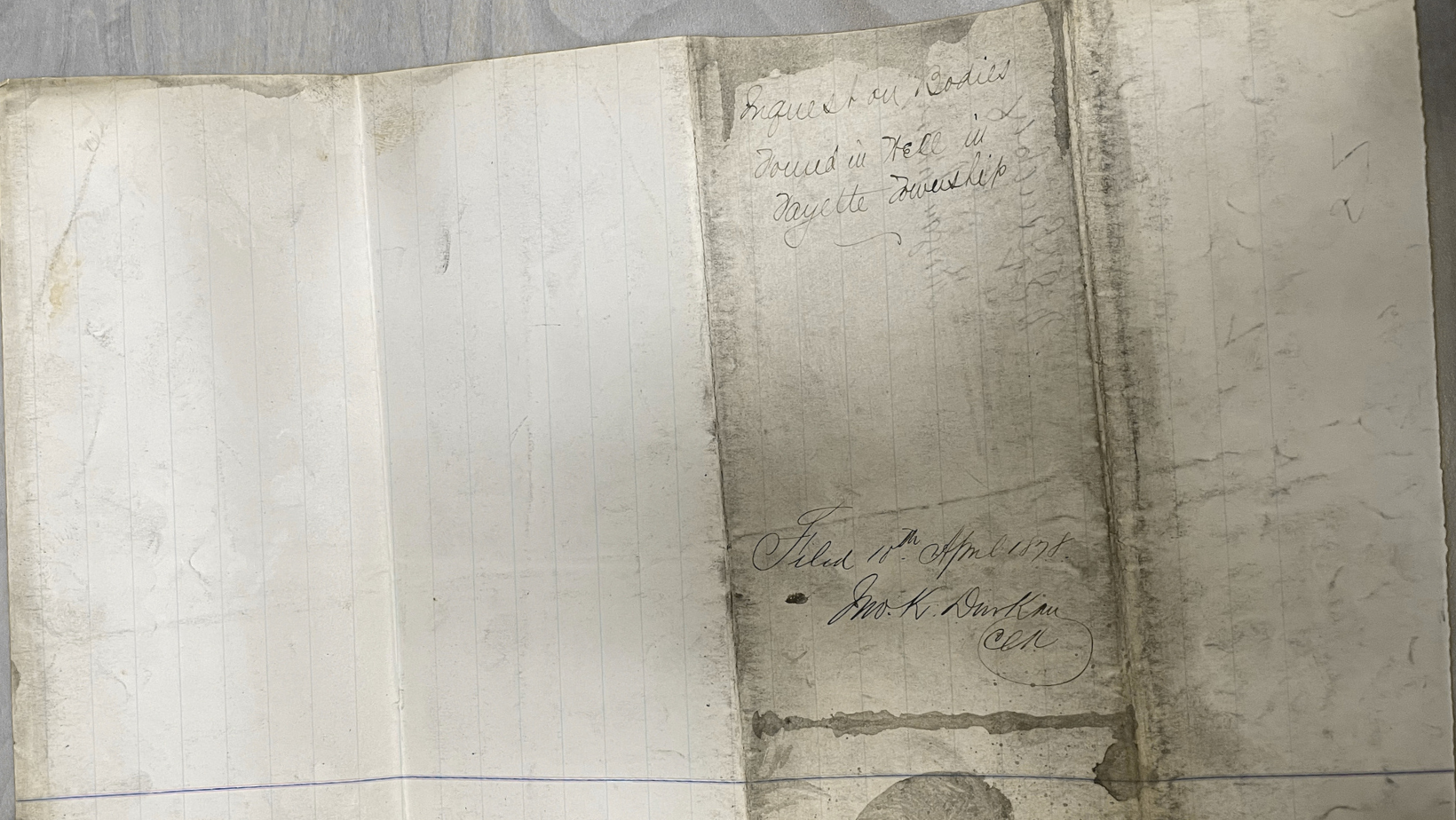
Figure 1. Coroner’s Inquest of Unknown Bodies, 1878, Accession 2025439, Box 2, Vigo County Coroner’s Inquests, Indiana State Archives, Indiana Archives and Record Administration, Indianapolis, Indiana.
By Kaitlyn Leib, IARA Intern and Indiana University Indianapolis Public History Student
In the Nineteenth Century, stealing corpses was not all that uncommon of a practice. As American medical schools increased in number and enrollment and focused more on an evidence-based education, the need for bodies to study and learn from grew.1 Previously, medical schools were supplied bodies by legal means and were often given the remains of criminals that had been condemned to death. However, there were not enough legally obtainable corpses to use, so some doctors and medical institutions would hire grave robbers to find and steal recently buried bodies. Grave robbers (also called ghouls, resurrection men, or body snatchers) would be paid to dig up bodies that were recently buried and supply them to local medical schools. In order to try to combat grave robbers, Indiana passed its first anatomy law in 1879, which made it so that if a dead body was unclaimed twenty-four hours after death, then it could be used as a medical subject, but this law did not deter the continuation of grave robbing throughout Indiana. Some grave robbers rose to fame due to their success, such as Indianapolis’ Rufus Cantrell in the early 1900s.2
An 1878 coroner’s report from Vigo County contained information about two unidentified bodies found in a well in Fayette Township. The bodies were believed to have been used as medical subjects. The two bodies were discovered by William D. Lindsey in late March of 1878. At first, William Lindsey did not know what the two objects were and so he ignored them. While walking together with his nephew, Morgan Lindsey, later that day, his nephew used a pole to move the objects, and it was then that William Lindsey saw an arm. The bodies were also noticed by a group of boys playing ball nearby. One of the boys went up to J. Wilkins and told him that he saw a “couple of men in a well.” Wilkins believed it to be an April Fool’s joke but checked the area later and saw the bodies. These witnesses testified that they had never seen the bodies before and did not know who they were.
Another witness, J. M. Bolton, testified that L. L. Norton told him that he “assisted in bringing a corpse from the cemetery in Terre Haute,” and put the body in a wagon with Dr. Morgan and driven by Emmet Shepherd. Another body “was at the side of the [Wabash] River” and taken. After examining the bodies and the evidence presented to them, a group of six jurors concluded that the two unidentified bodies were disinterred and operated on as subjects by some doctors that the jury did not know. It is likely that the bodies were stolen from their resting place, used as medical subjects, and then discarded in the well after their use. This case is just one example of the grave robbers that existed in Indiana during the nineteenth century.3
In general, coroner’s reports can give researchers important information. These coroner’s reports, sometimes called inquests, often describe the investigation of a deceased person and can include witness statements on the character of the deceased, the events leading up to their demise, a description of the deceased, and a jury’s verdict on the cause of death. They contain strong genealogical information, such as the deceased’s name, the name and relation of witnesses, and the name of jurors and local officials. These reports from Vigo County span a range from 1851 to 1878 but are largely made up of inquests from the 1870s. People of all ages, from infants to the elderly, were found in these reports. There were a variety of causes of death, including train related incidents, drownings, suicide, heart disease, and wagon accidents; only a few reports concluded unknown causes of death. Some of the coroner’s reports contain unique and interesting cases, just like this case about a grave robbery.
Notes
1. Lindsey Beckley, “Rufus Cantrell: King of Ghouls.” Produced by Jill Weiss Simins. Talking Hoosier History, Indiana Historical Bureau, 2020. https://podcast.history.in.gov/rufus-cantrell-king-of-ghouls/; Robert Bowling, “Grave Robbing.” Encyclopedia of Indianapolis, 2023. https://indyencyclopedia.org/grave-robbing/.
2. Beckley, “Rufus Cantrell: King of Ghouls.”
3. Coroner’s Inquest of Unknown Bodies, 1878, Accession 2025439, Box 2, Vigo County Coroner’s Inquests, Indiana State Archives, Indiana Archives and Record Administration, Indianapolis, Indiana. View full report.